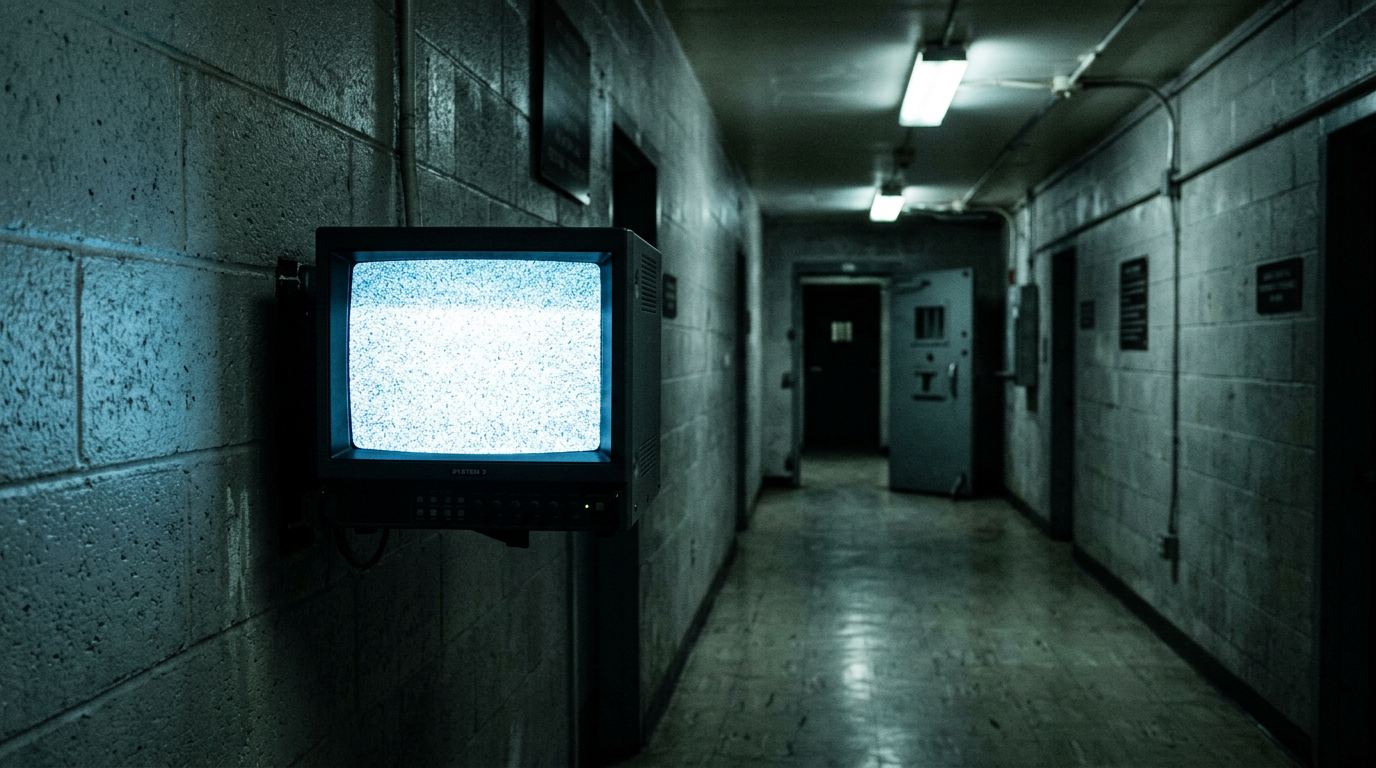
6:33 AM. Metropolitan Correctional Center, New York. A clinical nurse documents what she finds:
"Cold, circumferential Bruising around the neck and posterior mottling, Pupils Fixed and dilated"1
EMS arrived at 6:56. Body transported at 7:10. Jeffrey Epstein was dead.
That's the ending. Here's the record of how the most high-profile federal inmate in America got there — assembled entirely from the Bureau of Prisons' own internal documents, FBI communications, and MCC incident reports. Not a single claim in this article comes from outside the government's own paperwork.
July 6: Arrival
Epstein arrived at MCC on his first night. A staff member described him as "distraught, sad and a little confused" and "dazed and withdrawn." She emailed the psychology staff.
A lieutenant opened the email. He never contacted the on-call psychologist.2
July 18: Bail Denied
Judge Richard Berman denied Epstein bail. It was a significant psychological event for a man who had never spent a night in a real prison.
No psychologist assessed him. A specific protocol existed for exactly this situation — evaluating inmates after major adverse legal developments. It was not followed.2
July 23, 1:27 AM: The Orange Rope
Epstein was found with a homemade orange rope around his neck. His cellmate was Nicholas Tartaglione — a former police officer awaiting trial for quadruple homicide.
Epstein gave three versions of what happened:
- His "cellmate tried to kill him"
- Tartaglione had "extorted him"
- He couldn't remember — "sleep apnea"
Three stories. One incident. The Bureau of Prisons classified it as "Suicide Attempt — Hanging/Asphyxiation." Tartaglione's role was listed as "Not Known."3
The Video That Was Preserved — Then Wasn't
After the July 23 incident, SIS — the Special Investigative Services unit at MCC — confirmed to BOP attorney America Pina that surveillance footage from outside Epstein and Tartaglione's cell had been preserved. The response: "Done."
Then the story changed.
The US Attorney's Office told the court the footage could not be found. Deputy Regional Counsel Adam Johnson asked "what search was performed" before the USAO made that claim. The DVR was reported corrupted. The video was sent to the FBI Lab.
"All efforts to fix have been unsuccessful."4
SIS said it was saved. The USAO said it wasn't. The DVR was broken. The FBI Lab couldn't recover it. Four entities, four different answers, and one missing tape.
The Empty Cell
After the July 23 incident, Epstein was placed on suicide watch, then downgraded to Psychological Observation. His cellmate Reyes was transferred out.
No replacement was assigned.
MCC policy required a cellmate for inmates on Psychological Observation. The BOP's own reconstruction noted this explicitly — Epstein should not have been in a cell alone. FBI agents later confirmed the same: he "wasn't supposed to be in a cell alone" but that information "wasn't documented in writing."2 5
For the last days of his life, the most high-profile inmate in the federal system slept alone in a cell designed for two.
August 9: The Last Phone Call
On August 9 — the day before his death — Epstein made a phone call. He told staff he was calling his mother.
His mother had been dead since 2004.2
Fifteen years dead. The BOP's Psychological Reconstruction documented this without comment. Just a fact in the record, sitting there.
"Mr. Brown"
On Epstein's intake screening, the psychologist recorded three errors in a single document: Epstein was identified as a "Black male" named "Mr. Brown."
Jeffrey Epstein was a white male named Jeffrey Epstein. Three biographical facts — name, race, and surname — and the screening psychologist got all three wrong. In the same form. For the most famous incoming inmate in the facility.2
SENTRY — the BOP's electronic records system — showed three inmates assigned to Epstein's double-occupancy cell. The physical locator form showed him in an entirely different cell altogether. Electronic records and physical reality: completely disconnected.
161 Cameras
An MCC electronic technician documented the facility's surveillance infrastructure:
"we have a total of 161 cameras. At this time we are recording on the new system 141-146 cameras we need to work on 15-20 cameras to get them operational"6
Up to 20 cameras at the Metropolitan Correctional Center were not functioning. At a facility holding Jeffrey Epstein.
The Guards
Officers Tova Noel and Michael Thomas were assigned to Epstein's unit on the night of August 9–10. They later admitted they did not complete the required 30-minute rounds at 3:00 AM or 5:00 AM.
Their paperwork said otherwise.2
They signed forms documenting rounds they never made. The BOP's reconstruction confirmed it. The guards who were supposed to check on Epstein didn't check on Epstein — and then they wrote down that they did.
The Forged Log
It wasn't just the guards. A Drug Treatment Specialist copied false entries into the suicide watch log, fabricating records for 6:15, 6:30, 6:45, and 7:00 AM — the window during which Epstein died.
Out of 183 required hourly round signatures in the Psychology Observation logs, 179 were missing.2
Four forged. One hundred and seventy-nine absent. That's the documentation trail for the final days of the most surveilled inmate in America.
The Attorney Hours
During Epstein's time on suicide watch after the July 23 incident, attorneys visited for 6.5 hours — without continuous observation.
During Psychological Observation — the step below suicide watch — attorneys were present for 11+ hours per day, six consecutive days. Over 61 total hours of attorney access in a single week.2
No federal inmate in recent memory received that kind of legal access on a psych unit. What was discussed in those 61 hours has never been disclosed.
6:33 AM
Back to the clinical finding. August 10, 2019:
"Cold, circumferential Bruising around the neck and posterior mottling, Pupils Fixed and dilated"1
Cold. Not warm. Not recently deceased. Cold. The nurse documented what her hands told her.
EMS arrived at 6:56 — twenty-three minutes after the body was found. Transported at 7:10. The most important crime scene in federal custody was handled in thirty-seven minutes.
August 12: "So They're Taking the NVR?"
Two days after Epstein's death, MCC staff received an urgent internal email:
"The FBI is going to be retrieving the previous recordings from our camera system at MCC, but because we were having difficulty retrieving the recordings, they have told us the recording capabilities will be off line for up to 8-10 days while they retrieve this data."7
A staff member replied: "So they're taking the NVR? Do we know the make/model so that as an option we could get with the vendor and get an emergency replacement?"
The FBI took the Network Video Recorder. MCC had no backup. The facility's entire recording system went dark — for over a week — starting two days after its most famous inmate died under surveillance cameras that may or may not have been operational.
"Put Into Writing"
FBI agents working the death investigation texted each other. Those texts survived:
"upper management didn't want anything related to Epstein put into writing, so they'd pass things along via word of mouth"5
Word of mouth. For the investigation into the death of the most high-profile sex trafficking defendant in federal history. The agents documented — in their own text messages — that their superiors instructed them not to document.
One agent, in a later exchange: "doesn't think Epstein killed himself."5
Note(s) Left Behind by Deceased
The BOP's Psychological Reconstruction includes a list of documents examined during the investigation. One line item:
"Note(s) Left Behind by Deceased"2
Epstein left a note. Or notes — plural. They were examined as part of the reconstruction.
Their contents are not discussed. Anywhere. In any document released to date. What the most famous federal inmate in America wrote before his death remains, as of this writing, undisclosed.
The Proactive Denial
After Epstein's death, the public reaction was immediate and overwhelming. Conspiracy theories proliferated. Memes spread. "Epstein didn't kill himself" became a cultural fixture.
And then, unsolicited, Nicholas Tartaglione's attorney Bruce Barket made an offer:
"Mr. Tartaglione has information that would be helpful in rebutting the proposition that Epstein was murdered and will support the conclusion that Epstein was suicidal."8
Nobody asked. No court ordered it. No investigator requested it. The cellmate from the first incident — the former cop awaiting trial for four murders — had his attorney proactively volunteer to disprove a theory that, officially, no one in government was entertaining.
Meanwhile, DOJ prosecutors recommended redacting references to "Epstein's memory of the incident" and his "safety concerns in the SHU" because they "tend to suggest that Epstein was implying he was attacked."4
The government wasn't investigating whether Epstein was murdered. It was redacting the evidence that he said he was.
What the Record Shows
This article contains no conspiracy theory. Every fact comes from Bureau of Prisons internal documents, FBI text messages, MCC staff emails, and clinical records produced by the government itself.
The record shows:
- A psychologist's email intercepted by a lieutenant and never forwarded
- No mental health assessment after bail denial, despite existing protocol
- A first incident with three contradictory explanations and a cellmate awaiting trial for quadruple homicide
- Video that was preserved, then wasn't, then was corrupted, then was unrecoverable
- 15–20 non-operational cameras out of 161
- A single cell in violation of explicit policy
- A last phone call to a mother who had been dead for fifteen years
- An intake form identifying a white man named Jeffrey Epstein as a Black man named Mr. Brown
- Guards who didn't do their rounds but signed paperwork saying they did
- A Drug Treatment Specialist who forged four log entries during the death window
- 179 of 183 required signatures missing
- 61 hours of unmonitored attorney access in six days
- FBI agents told not to put anything about Epstein in writing
- Recording equipment removed by the FBI, taking the entire camera system offline
- A note left behind by the deceased whose contents have never been disclosed
- A cellmate's attorney volunteering, unprompted, to prove it was suicide
Every one of these facts is documented in the government's own paperwork. The Bureau of Prisons wrote it all down — the failures, the forgeries, the contradictions, the gaps. They created the record of their own institutional collapse, item by item, form by form.
The official ruling is suicide. The official record is a catalogue of everything that would need to go wrong for a murder to succeed.
This is the final article in The Blackmail Files series. Previously: "A CIA Operative Who Worked with Dad" — the intelligence web. Start from the beginning: Kleenex Boxes and Labeled DVDs.
Sources & Documents
- vol00009-efta00122421 — Clinical nurse memo, August 10, 2019. "Cold, circumferential Bruising around the neck and posterior mottling, Pupils Fixed and dilated." View →
- vol00009-efta00121398 — BOP Psychological Reconstruction of Inmate Death. Master anomaly document covering intake errors, missing assessments, forged logs, attorney access, phone records, and note(s) left behind. View →
- vol00009-efta00138265 — Form 583, Incident Report NYM-19-0076. July 23, 2019 incident classification: "Suicide Attempt — Hanging/Asphyxiation." Tartaglione role: "Not Known." View →
- vol00009-efta00089865 — Internal chain documenting video preservation contradiction. SIS confirmed "Done"; USAO told court footage was missing; DVR corrupted; FBI Lab recovery unsuccessful. DOJ redaction recommendations. View →
- EFTA01626081 — FBI agent text messages, 2019–2020. "Upper management didn't want anything related to Epstein put into writing." Agent: "doesn't think Epstein killed himself." View →
- vol00009-efta00122393 — MCC Electronic Technician memo. "161 cameras... 15-20 cameras to get them operational." View →
- vol00009-efta00142908 — MCC internal email, August 12, 2019. FBI retrieving NVR, "recording capabilities will be off line for up to 8-10 days." Staff: "So they're taking the NVR?" View →
- vol00009-efta00146837 — Tartaglione attorney Bruce Barket cooperation offer. "Mr. Tartaglione has information that would be helpful in rebutting the proposition that Epstein was murdered." View →